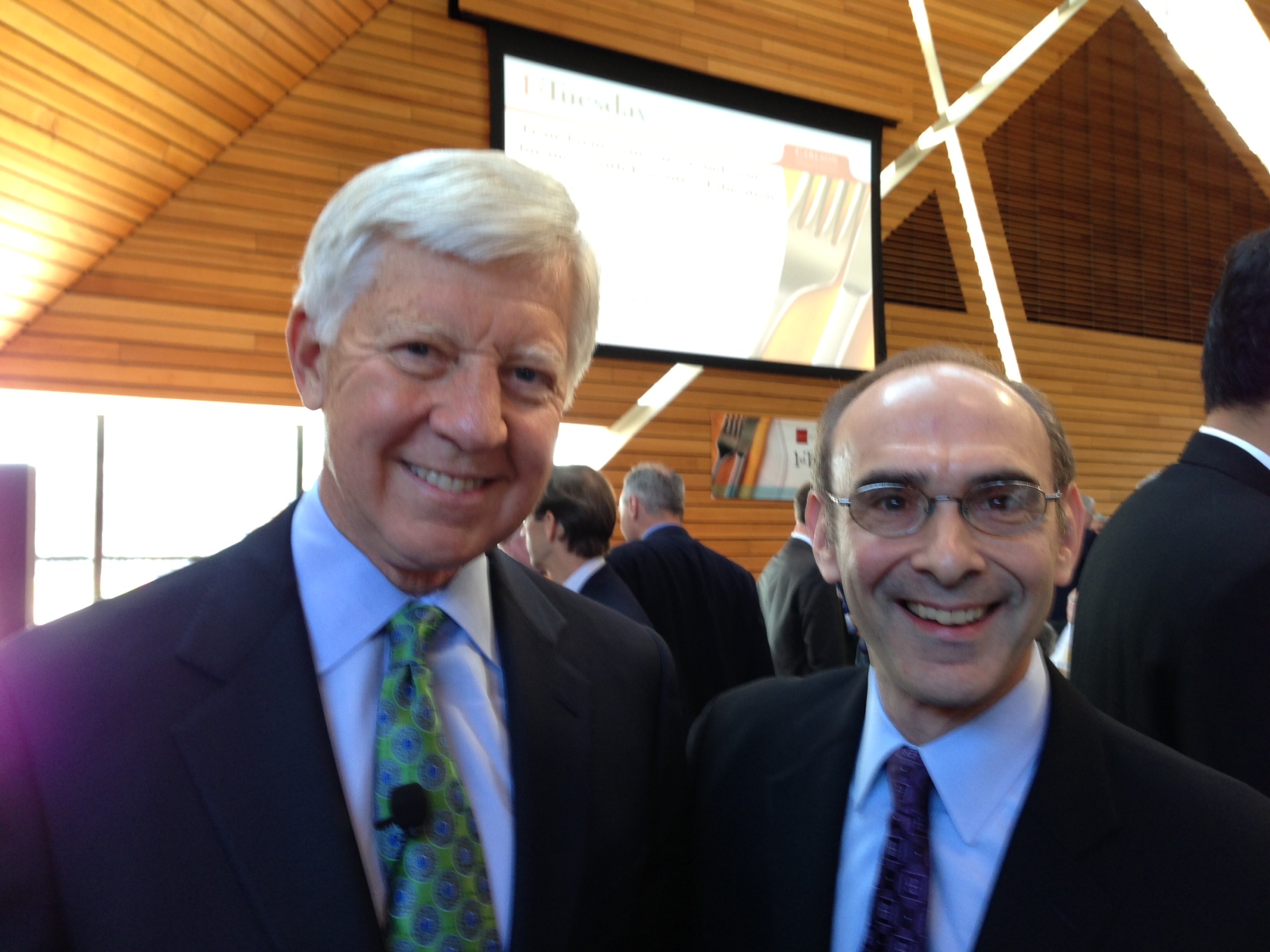
 Today, I attended a talk by my friend and mentor, Bill George, author of True North. Bill has written the foreword to my new book, Leadership and the Art of Struggle, which will be published next March.
In his talk at the Carlson School of Management’s “First Tuesday Series,” Bill shared his vision for global leadership in the 21st century, outlining seven factors that contribute to global leadership intelligence, or as Bill called it, “GQ.”
- World View. Global citizen’s don’t impose their myopic view on other cultures, but recognize and cherish that there are multiple perspectives, and these perspectives must be understood and honored.
- Self-Awareness. We all have biases. We need to be aware of them and do our best to confront them before they limit our thinking. Bill talked about his own blind spot, stemming from a bad experience in Russia early in his career, which made him overly cautious about tapping business development opportunities there. Only after he became aware of this blind spot could he proactively take the steps to expand his thinking, leaving him more open to business potential that had previously remained hidden and unexplored.
- Empathy. Empathy comes from understanding the life stories of people from different cultures, and engaging them on their turf. You must immerse yourself, not simply by visiting another country but actually living abroad.
- Cultural curiosity. This requires us to step out of our comfort zone to explore new customs and traditions with zestful inquisitiveness, asking probing questions to understand new customs at a deep level.
- Alignment. This is all about aligning behavior and practices with the values and culture of your organization. With global businesses, it is so easy to let values drift. Bill urges us to anchor ourselves with our own values, being clear on what they are, and sticking to them even if it seems like there is a more “expedient” solution in the short term.
- Collaboration. In a global society, we need to cultivate and foster cross-border partnerships, building the type of trust that supports productive and efficient workflow processes. Bill talked about a “24 hour cycle” at Medtronic where development cycle where work completed in India is smoothly handed off to the US, just in time for a full day’s activity, then passing it back to India to begin the cycle the next day, anew.
- Capacity for global and local integration. After stretching ourselves to tap into the global marketplace, we also need to integrate what’s happening at a local level. How you integrate local needs with global opportunity is no easy feat.


Helpful info. Fortunate me I discovered your website by accident, and I’m surprised why this twist of fate did not came about in advance! I bookmarked it.
this is really cool, I like here!