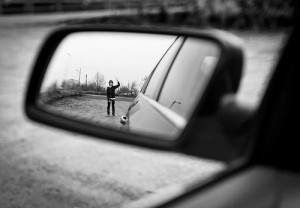
 “He was right in my blind spot!”
How many times has that been said after a car or a cyclist has suddenly pulled into view? Sometimes you hear the horn before you see the vehicle, or you glance in your mirror one more time and feel a sense of panic when you see a car that wasn’t there seconds before.
Blind spots are an inevitable part of driving, but confident drivers will do two things:
1) Check mirrors AND turn their head to look before changing lanes
2) Respond calmly when a car emerges from the blind spot
Similar to a situation on the road, we can also be blindsided at work and in our careers. As leaders, there are times when we “never saw it coming” and rather than pro-actively plan for the event, we end up re-actively trying to clean up the mess.
In Leadership and the Art of Struggle, I define blind spots as anything that can hinder or undermine your performance that you are either unaware of or have chosen to overlook.
To avoid the dangers of blind spots in an automobile, you must make a conscious effort to be proactive. Frame your back window in your rearview mirror, and move your side mirrors so that you see more of the road than the vehicle. With a few adjustments, the percentage of risk is reduced.
While it’s not possible to eliminate blind spots, it is important to be aware of them, and if you’re unsure of what they are, then you must proactively seek to discover them. Sometimes that means working with a coach or mentor who can provide an outside perspective, giving you insight into what you’re missing.
Even without a third-person view, you can and should spend time reflecting on your experiences, reviewing how your blind spots may have affected, or be affecting, the situation. Once you recognize the trouble areas, think about what you could do differently (adjusting the mirror, so to speak), to engage adaptively and constructively with your current situation.
Often, when confronted with a car emerging from the blind spot, we react with panic, which can cause us to overreact and overcorrect. It might make us angry and we might blame the other driver for hanging out where we could not see them.
If you find yourself reacting the same way as a leader, it may be that your blind spot is still active. In the moment of blind spot revelation, you can make a choice to respond calmly, viewing the situation as a learning experience and an opportunity for growth, or you can overcorrect and cause an even bigger issue. It’s easy to blame others or become complacent in your leadership, but it’s worthwhile to take the harder path and embrace self-discovery and growth.
Are you ready to adjust your leadership mirrors?
Photo Credit: dinohyus